Adriana
Sohodoleanu
gastronomy theorist
ABOUT THE RESIDENT
Adriana Sohodoleanu is a gastronomer who lives by the principle of walk the walk and talk the talk, combining hands-on experience in production and retail—with ten years as the owner of an artisanal pastry shop and gourmet concept store—with an academic career culminating in research into the phenomenon of the “New Romanian Cuisine,” a thesis that earned her a PhD in Sociology.
A lecturer at universities specialising in gastronomy and hospitality, as well as at the Calea Victoriei Foundation, she hosts the weekly “Culture on a plate” segment on Radio România Cultural. She is the co-author of “Sărut-mâna pentru masă. Carte de(spre) bucate” (2025), author of “Ce e nou în Noua Bucătărie Românească?” (2023), curator of the historical recipe collection for the “Dulce Românie” project, and co-author of the book of the same name (2021).
A contributor to Dilema, Scena9, Iscoada, and other publications, Adriana travels extensively and experiences the world through food. She lets taste guide everything she does and believes that the saying de gustibus non disputandum est should be understood to mean that tastes should be discussed, not imposed. Taste is felt on the tongue, but ultimately processed by the brain because, as Lévi-Strauss wrote, food is also something we use to think with. Through food, we talk about people, society, and culture.
ABOUT THE RESIDENCY
Homo viator: the threshold of taste
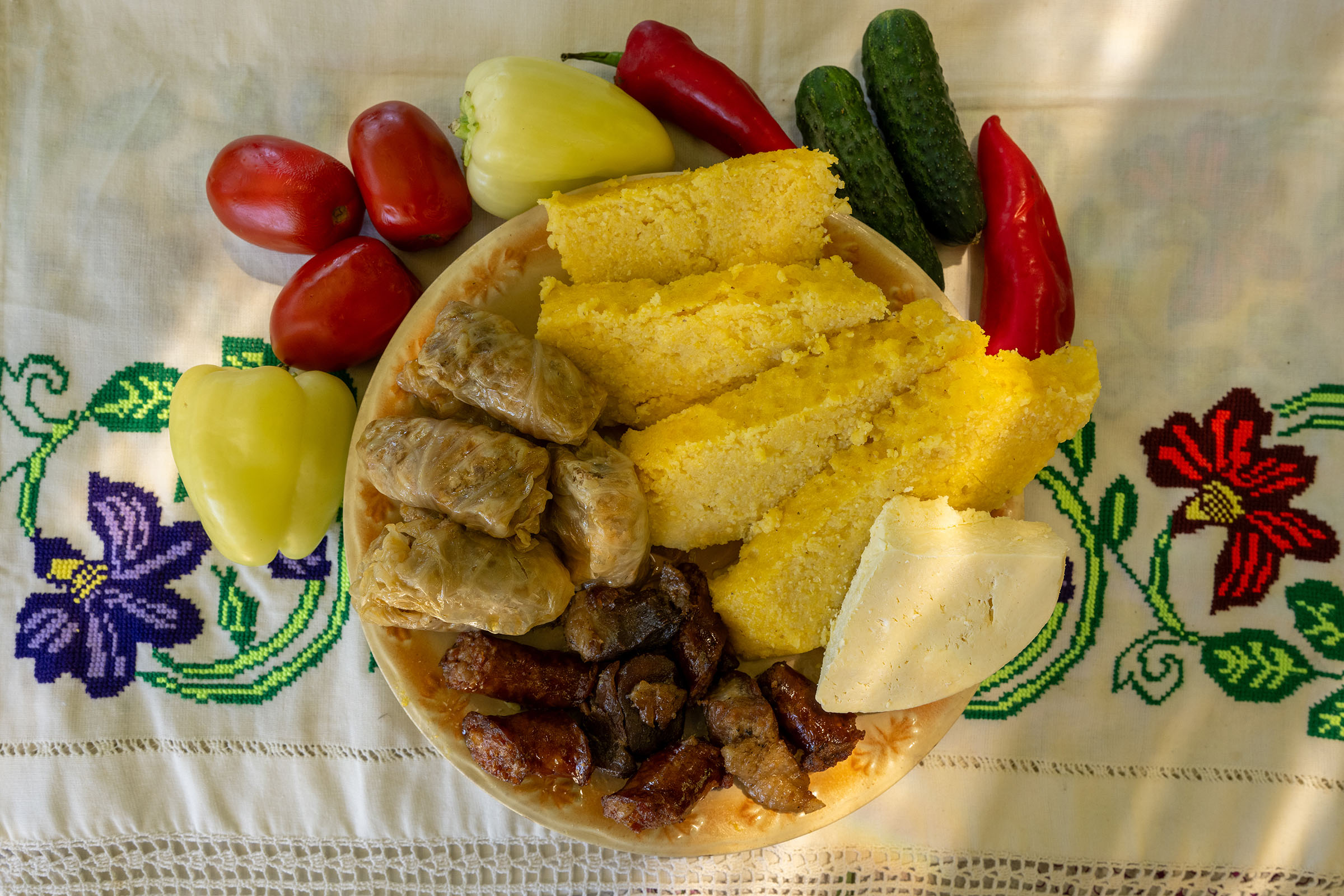
If the literary residency opens up the threshold of departure through words, the gastronomic component approaches this beginning of the journey through the senses (taste, smell, and texture). Bucovina is the land where, before learning the geography of the route, the hiker first understands hospitality as a language, and Bucovina’s hospitality has a recipe of its own. The cultural syncretism of the region, shaped both by Austrian imperial influences and by its distinctive rural traditions, can also be observed and (re)discovered in the dishes prepared by local hosts. The gastronomic residency explores a form of culinary archaeology: what truly defined the autumn season in Bucovina from a culinary perspective, before taste was standardized by tourist menus or generic recipe books? This question belongs equally to history and sensory memory; essentially, we look at taste as a document.
The residency aims to identify or reconstruct a recipe specific to the autumn season (a dish, preparation, or culinary custom strictly associated with this season and this region) and document it as a historical artifact. The research should trace the sources of the recipe (oral histories, local archives, practices that are still alive in households) and, as far as possible, reconstruct the context in which it was prepared: who cooked it, which local ingredients were used, and on what occasion (holiday, wedding, funeral, breakfast, lunch, dinner, etc.). In essence, the gastronomist develops the same theme of the threshold, but through the senses: the taste of autumn in Bucovina as a kind of “welcome” offered to the hiker.
ABOUT THE REGION
Situated in the north-east of the country, at the meeting point between Transylvania and Molova, Bucovina is a territory of crossings: between regions, histories, communities, and landscapes. For Via Transilvanica, it marks the beginning of the journey and is known for the high level of difficulty of its terrain, which serves as a baptism for the long-distance traveler. It prepares them physically, but above all mentally and spiritually, for a long journey all the way to Drobeta-Turnu Severin.
The 144 kilometers of the route pass through villages, forests, valleys, and gentle ridges, bringing to light a distinctive natural and cultural heritage. Putna is the starting point, where the hiker is rested and has an unknown journey stretching out before them.
Along the way, even those who spend fewer days on the trail immediately encounter the hospitality specific to the region, most often expressed through its rich gastronomy, filled with old recipes whose flavors bear the imprint of diverse cultural influences.
The story begins in Bucovina, with a hollow feeling in the stomach at the thought of the unknown ahead, but one that quickly fills up… at the latest when the hiker reaches Sadova.
ABOUT THE CULTURAL IMPRINT LEFT ON THE REGION
The outcome of the residency is a historical-gastronomic document: a reconstructed recipe, accompanied by its story (where it comes from, who preserves it, and what it reveals about the region). This document can, in turn, become a form of “vestige” accessible to hikers. In addition, at the place where the resident was hosted along the route, other travelers will be able to discover the recipe prepared for them by local residents.
Ideally, the two residencies, literature and gastronomy, should be in dialogue with one another, even if they produce distinct cultural imprints.